

Annual fire alarm inspections that pass the first time.
We test every device, document every result, and hand you a report your AHJ will accept. If something fails, you get a clear quote to fix it — not a vague warning and a phone call three weeks later.
What the annual inspection covers
- Every initiating device tested smoke and heat detectors, duct detectors, pull stations, waterflow and tamper switches.
- Notification appliances verified audibility and visibility checked throughout the occupied areas.
- Control panel and annunciator trouble, supervisory, and alarm conditions verified end to end.
- Batteries load tested and calculations checked against the panel's standby requirement.
- Communication paths verified signals confirmed received at the central station on every path.
- Interfaces tested elevator recall, damper closure, door holders, and mag lock release.
- Report filed digitally with deficiencies itemized and severity stated.
Three things we do differently.
We test everything, not a sample.
Every device gets actuated. Sampling is faster and it is how buildings end up with detectors that have been dead for years while the paperwork says otherwise.
We tell you what failed before we leave.
You should not learn about a life safety deficiency from a report that arrives next week. Anything serious gets raised on site, with the correction quoted separately so you can decide.
We keep the history.
Reports are retained and re-sent whenever you need them. When an AHJ asks for three years of inspection history, that request should take us five minutes, not you an afternoon.
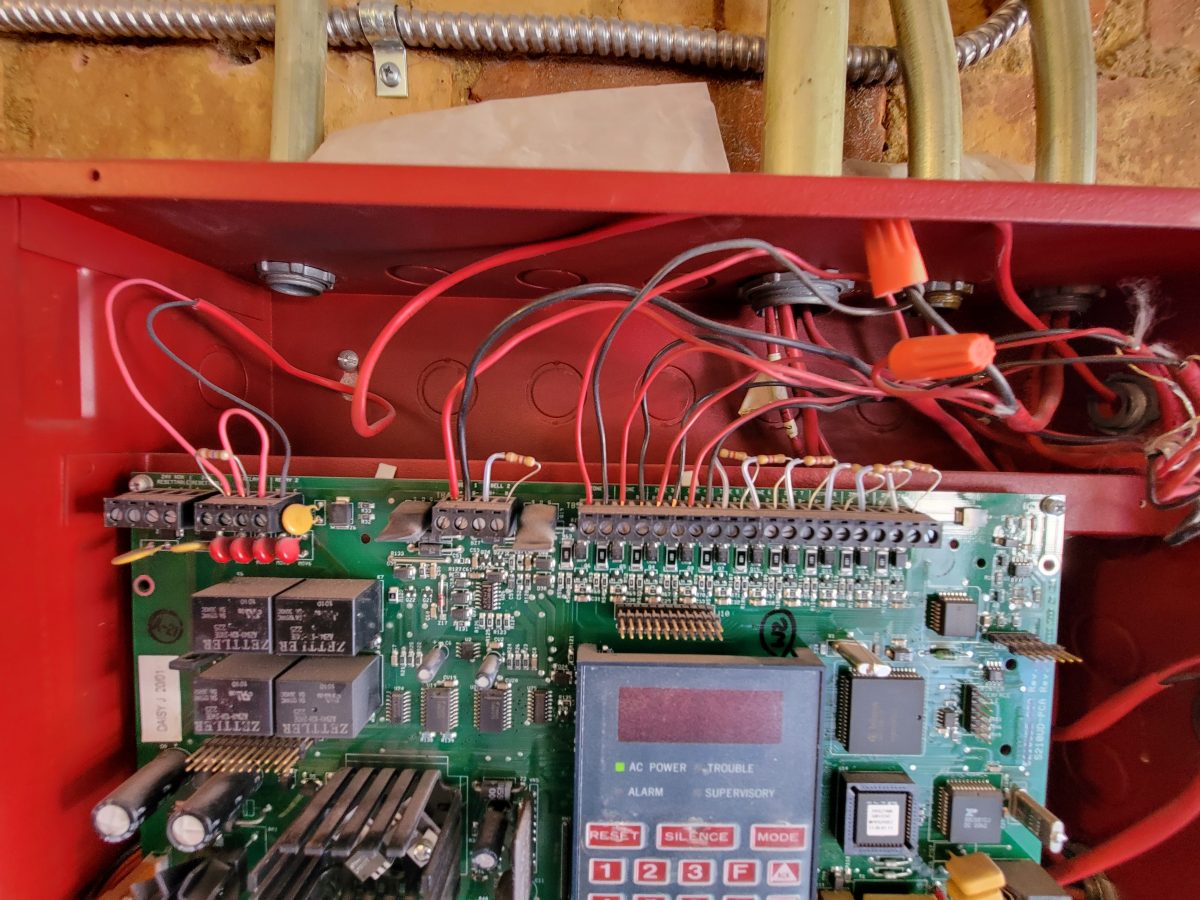
Most of the inspection happens where nobody looks.
A panel in normal condition shows AC power and nothing else. What an inspection establishes is what it does when that is not true — whether a broken initiating circuit actually reports as a trouble, whether the batteries will carry the load for the required standby period, and whether supervisory signals reach the central station rather than only lighting an indicator on the door.
That is why the annual is a functional test rather than a look around. A system that has sat quietly for a year has demonstrated nothing except that nobody has tested it.
What you receive after the visit.
The report is the deliverable. The visit is just how we produce it.
Digital report
Delivered after the inspection, formatted for your AHJ.
Itemized deficiencies
Each one with severity, so a dead battery reads differently from a failed detector.
Line-by-line quote
Approve corrections individually rather than as a single number.
Records retained
Re-sent on request, for as long as you are a customer.
We inspect systems other contractors installed.
Taking over an inherited fire alarm is routine work. The first inspection establishes what is actually installed and what condition it is in — which, in buildings where documentation was never handed over, is frequently the first honest inventory anyone has had.
We file your inspection paperwork with the authority that wants it.
An inspection is not finished when the testing stops. It is finished when the code compliance documentation is on file with the office that requires it — and which office that is changes from one municipality to the next, sometimes across a town line.
We file fire alarm inspection paperwork with the code enforcement and fire prevention offices in: Cohoes, Glens Falls, Johnstown, Rensselaer, the Saratoga Springs Fire Department and the Schenectady Building Department.
Also with the Town of Clifton Park building department, Town of Colonie fire services, and the towns of Glenville, Guilderland, Halfmoon, Malta, Niskayuna, North Greenbush and Rotterdam — plus the villages of Colonie, Menands and Scotia.
The distinction matters more than it sounds. The Village of Colonie files separately from the Town of Colonie, and an address on the Rensselaer–North Greenbush boundary goes to a different office depending on which side of the line it sits. Knowing that before an inspection is the difference between a report that lands and one that has to be resubmitted.
Questions we get asked about this.
How long does an annual inspection take?
It scales with device count. A small building is a few hours; a large apartment complex or school can run more than a day, particularly where we need access to individual units or classrooms.
We schedule around your operations and coordinate resident or staff notice in advance.
Do you need access to every apartment or room?
Where devices are installed inside units, yes — those devices are part of the system and skipping them means the inspection is incomplete.
We give notice well ahead and work with property management on scheduling and re-visits for missed units.
What if the system fails?
You receive an itemized report with each deficiency and its severity, plus a quote to correct it. Life safety items are raised before we leave the building.
A failed inspection is not a crisis if it is documented and corrected. It becomes a crisis when nobody knew.
Can you inspect a system you did not install?
Yes. Most of the systems we inspect were installed by someone else. We test what is there and document it honestly, including where equipment is obsolete.
Do you file the report with the fire marshal?
We provide the report in the format your AHJ expects and can submit it where the jurisdiction accepts submission from the contractor. Requirements vary between municipalities in the Capital Region, and we will tell you what yours needs.
Book an inspection
Tell us what is in the building and when it was last inspected. We establish the baseline, perform the work, and take over the calendar from there.
-
We call within one business day
To find a time that works around your operations, not ours.
-
A technician walks the property with you
Bring whatever documentation you have, or none at all. We document what is installed, what is missing, and what is coming due.
-
You receive a written plan and price
One plan for the whole property, phased across budget years if that is what the building needs.
-
Nothing else happens unless you say so
We do not chase. If the timing is wrong, tell us when to check back.