

Cameras positioned to answer the question you will actually ask.
Anyone can hang a camera. We design coverage around the incidents that matter — the loading dock, the cash handling point, the door people actually use — with resolution good enough to identify, not just observe.
What a camera project includes
- Coverage design based on the incidents your building actually reports, not a count of walls.
- Camera selection per position resolution, lens, and low-light capability chosen shot by shot.
- Recording and retention on-site NVR sized to the retention period you need to keep.
- Network and cabling drops, switches, and PoE sized so the system does not fight your IT.
- Remote viewing phone and desktop access with per-user permissions.
- Motion and analytics rules alerts on the events worth knowing about, tuned to reduce noise.
- Access control and intrusion integration so events bookmark the footage automatically.
Three things we do differently.
We start from the incident, not the floor plan.
Before we place a single camera we ask what you have actually had to review footage for. Theft at the dock, a slip-and-fall claim, a disputed delivery, a vehicle in the lot overnight. Each of those needs a different angle and a different lens.
We design for identification, not just recording.
There is a large difference between footage that shows someone was there and footage that shows who. That comes down to pixels on target, camera height, and controlling backlight at doorways. Most unusable footage we are asked to review failed on one of those three.
We size retention honestly.
Incidents are frequently discovered weeks later — an insurance claim, an HR complaint, a chargeback. We size storage for the window you actually need rather than the cheapest recorder that fits the camera count.
Equipment we install
Commercial-grade cameras and recorders, specified per position rather than bought as a kit.
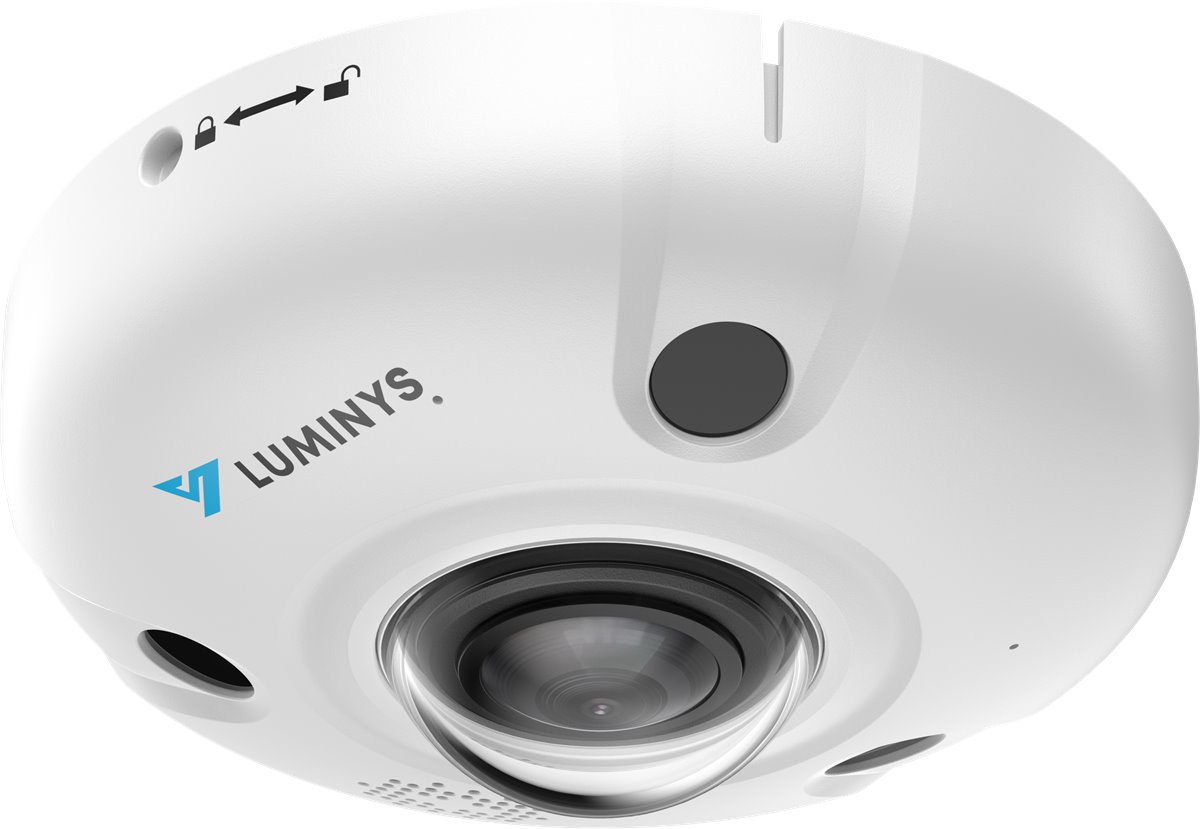
The right camera is the one that suits the space.
A fisheye like this one covers an entire open floor from a single ceiling position — a lobby, a sales floor, a warehouse aisle — where four fixed cameras would otherwise be needed to do the same job, along with four cable runs and four licences.
Elsewhere the answer is different: a varifocal bullet down a long corridor, a turret under a soffit, a vandal dome in a stairwell. We specify per opening and per sightline, and we will tell you where a camera is not worth the money.
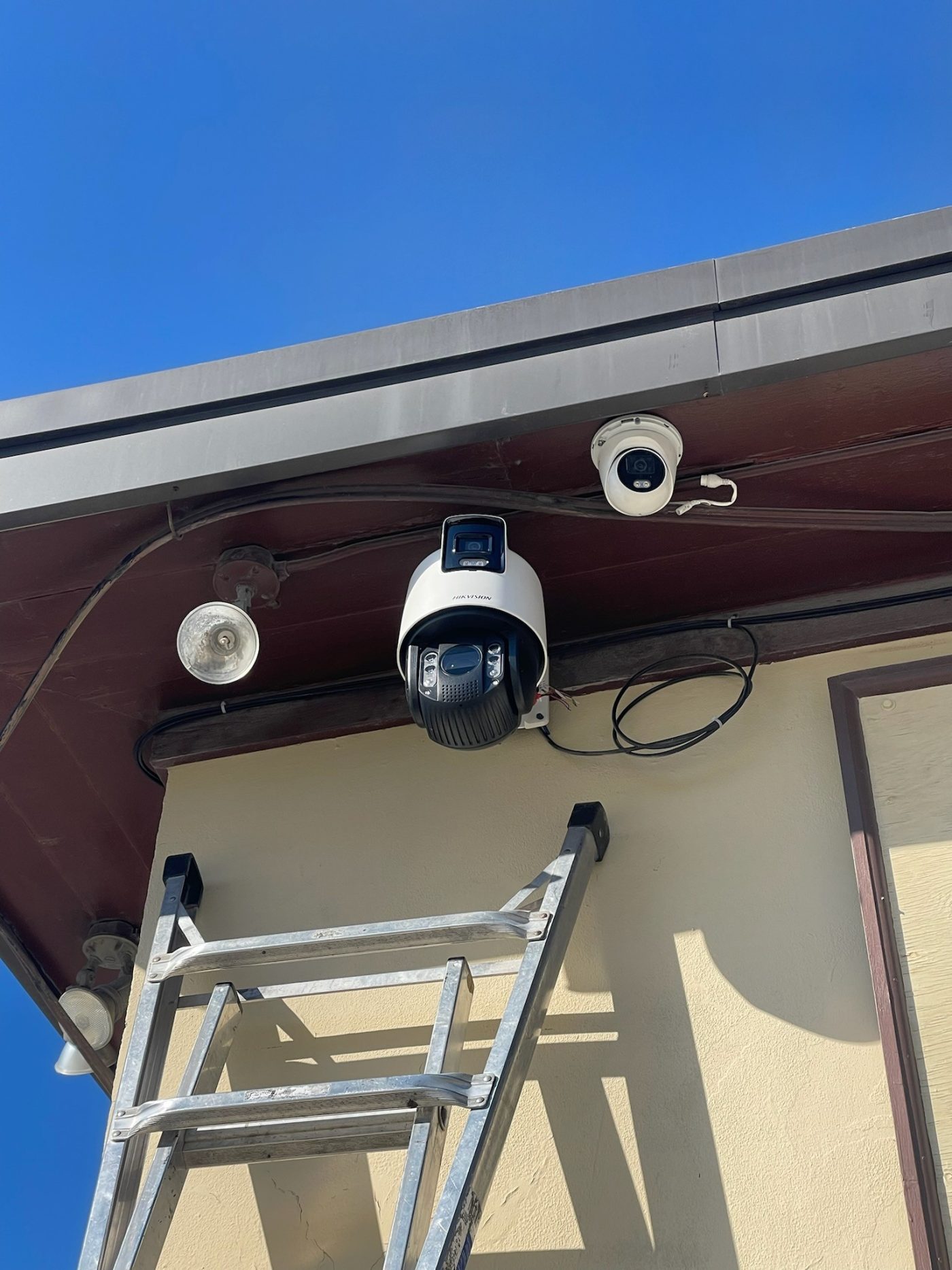
A camera that can look anywhere is not the same as one that is always looking.
The PTZ here can be driven across a whole lot and zoomed onto a plate or a face. The fixed turret beside it does one thing and never stops doing it. Pairing them is deliberate: a PTZ pointed the wrong way at the wrong moment records nothing, so the fixed camera holds the shot that has to exist regardless.
The coil of spare cable at the entry is not untidiness. It is the difference between re-terminating a head on a ladder in ten minutes and pulling a fresh run the length of the building because somebody left no slack.
Where the camera system is a condition of the licence.
We look after the security and camera systems at Higher Tier on South Pearl Street in Albany, and the alarm and cameras at Flower Bank in Schenectady, between Guilderland Avenue and Broadway.
Licensed dispensaries are unusual among commercial buildings: the surveillance system is not there because somebody decided it was worth having, it is there because New York requires it as a condition of operating. Coverage, recording and retention are specified by the regulator rather than negotiated, and a system that drifts out of compliance is a licence problem before it is ever a security problem.
That changes what matters. Uptime and retention have to be demonstrable, not merely working, and a failed drive is not something to get round to. It is the same argument as fire alarm inspection, applied to cameras — the obligation is continuous, so somebody has to own it continuously.
Requirements are set by the state and do change; we work to whatever the current rules are rather than to a spec written when the system went in.
Cameras carry no required inspection interval.
Unlike fire alarm, extinguishers, hood suppression, and emergency lighting, there is no code interval behind a camera system and no authority coming to check it. Anyone telling you otherwise is selling you something.
That does not mean the system looks after itself. We put camera service on a contract whenever a customer wants one, on whatever schedule suits them — annually, twice a year, or simply when something needs attention. It is your call, not a requirement we invented.
What we recommend is an annual clean and firmware updates as they are needed. A camera that has spent a year under a soffit collecting cobwebs and road film is no longer the camera that was specified, and firmware releases are where manufacturers fix recording faults and close security vulnerabilities.
Footage is only useful if it holds up later.
Cameras in common areas, workplaces, and multifamily buildings carry privacy considerations that vary by use and by state. We design coverage that captures what you need without pointing cameras where they create liability — and we document retention so footage exists when a claim arrives weeks later.
Where we install these systems.
Questions we get asked about this.
How many cameras does my building need?
Usually fewer than a salesperson will quote and placed more deliberately. Four cameras covering the positions where incidents actually happen beat twelve covering hallways where nothing does.
The survey walks the building with you and identifies those positions before any count is proposed.
How long is footage kept?
That is a design decision, not a fixed answer. Retention depends on camera count, resolution, frame rate, and recorder capacity — and on how long it typically takes for an incident to surface in your operation.
Thirty days is a common starting point. Buildings with insurance or HR exposure often want longer.
Can I watch the cameras from my phone?
Yes, with per-user permissions so a site manager sees their building and not every property you own. Live view, recorded playback, and event notifications are all available remotely.
Will the cameras work at night?
The cameras we specify have infrared or low-light capability appropriate to the position. The harder problem is usually not darkness but mixed lighting — a bright doorway against a dark lot silhouettes anyone walking through it.
That is solved by camera placement and lens choice, which is a design question rather than a hardware one.
Can you integrate cameras with our access control?
Yes. Access events tag the corresponding footage so you can search by event rather than scrub a timeline. That integration is one of the practical advantages of having both systems from the same contractor.
Request a site survey
We walk your building, document what you have, identify what is missing or coming due, and give you one written plan for the whole property. It takes about 45 minutes and costs nothing.
-
We call within one business day
To find a time that works around your operations, not ours.
-
A technician walks the property with you
Bring whatever documentation you have, or none at all. We document what is installed, what is missing, and what is coming due.
-
You receive a written plan and price
One plan for the whole property, phased across budget years if that is what the building needs.
-
Nothing else happens unless you say so
We do not chase. If the timing is wrong, tell us when to check back.