

Construction site security and low-voltage rough-in.
Two different jobs on the same site. We provide temporary surveillance for equipment and materials during the build, and we run the permanent low-voltage infrastructure — conduit, cabling, and device rough-in — coordinated to your schedule instead of holding it up.
What a construction site needs
- Temporary camera coverage equipment, materials, and the access points during the months the site sits unsecured.
- Copper and material theft deterrence the two things most likely to disappear, and the two most disruptive to replace.
- Low-voltage rough-in coordinated to the schedule conduit and cable in before the walls close, not chased afterward.
- Device rough-in for the permanent systems fire alarm, access control, cameras, and data, placed to the approved drawings.
- Firestopping at rated penetrations done as we go rather than found during the final inspection.
- As-built documentation labeled drawings the owner actually receives at closeout.
- Commissioning and acceptance testing including the fire marshal's acceptance test at the end of the job.
What matters at closeout.
On a construction project, the compliance items all land at the end — and that is exactly when a delay is most expensive.
| Item | Interval | Reference | Why it matters here |
|---|---|---|---|
| Fire alarm acceptance test | At closeout | NFPA 72 | The AHJ's acceptance test is a common source of certificate-of-occupancy delay when the system was installed without the inspection in mind. |
| Firestopping at penetrations | As installed | Building code | Found during final inspection if it was not done during rough-in, and expensive to correct once ceilings are closed. |
| Emergency & exit lighting | At closeout | NFPA 101 | Fixture placement against the approved egress plan, verified before occupancy. |
| Cable certification | At closeout | TIA standards | Test results form part of the closeout documentation the owner receives. |
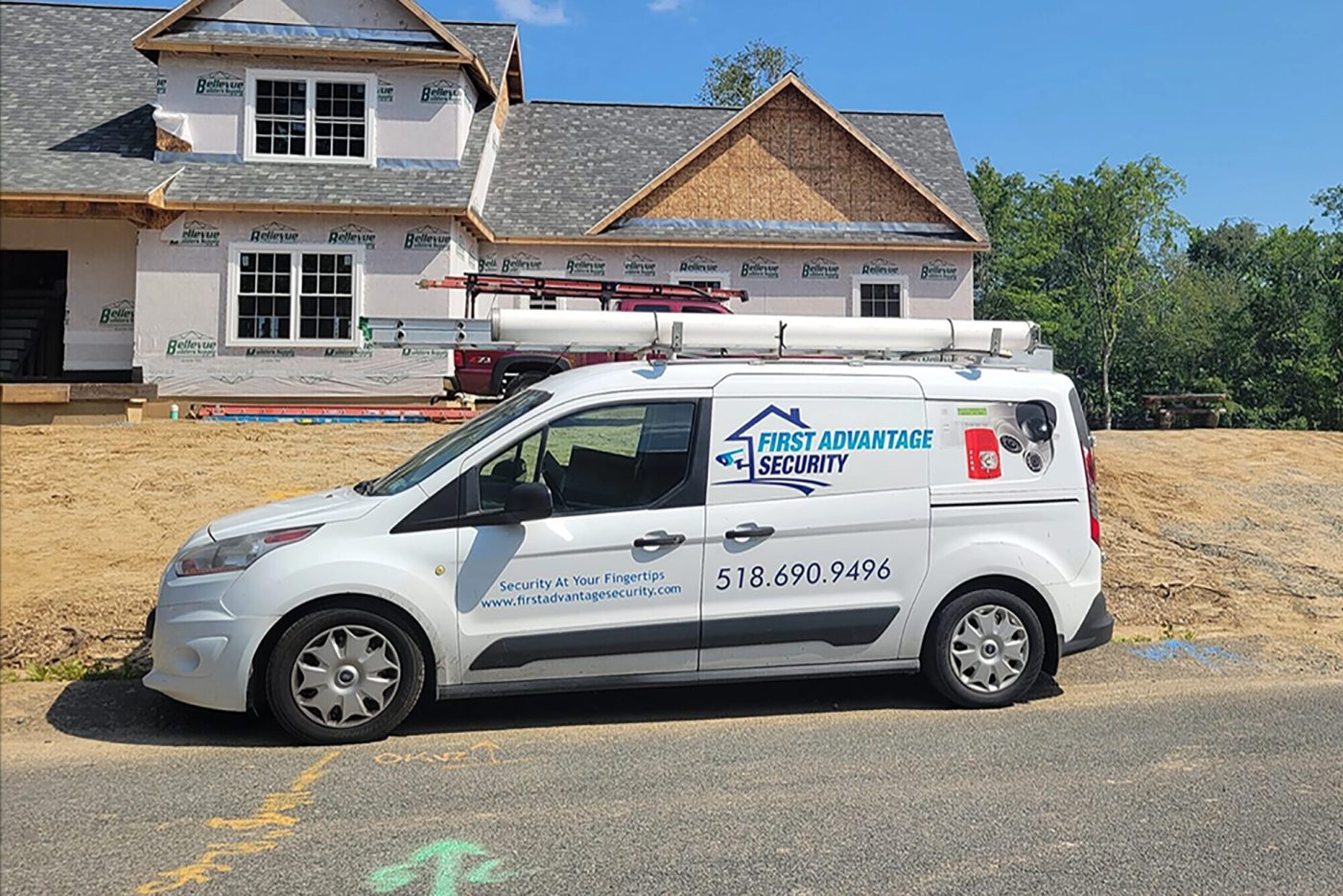
The cheapest time to wire a building is before the walls close.
Every device on the finished system — camera, keypad, contact, detector, reader — is a cable that has to reach it. Run during rough-in, that cable costs almost nothing. Run after drywall, it means fishing walls, cutting and patching, and paying twice for work that could have been done once.
We work to the construction schedule rather than across it: on site when framing is open, out of the way when it is not, and back for trim and acceptance testing on the dates the closeout schedule actually needs them.
What a construction project usually looks like.
The version that goes well: we are in the trailer at the coordination meetings, our rough-in is sequenced against framing and ceiling grid, and the acceptance test is scheduled well before the certificate of occupancy date rather than the week of it. The version that goes badly is always a scheduling failure rather than a technical one.
Two recent examples. At the new construction of Armory Chrysler Dodge Jeep of Albany we installed the network cabling and the security cameras as the building went up — not retrofitted into a finished dealership, but run while the structure was still open, which is the difference between cable in a pathway and cable fished through a wall.
And between 255 Orange Street and the new build at 236 Clinton Avenue we installed and terminated the fiber connecting them. That is the other kind of construction work: not wiring one building, but joining a new one to something the client already operates, so the two behave as a single site from the day the doors open.
Both were possible only because the work was scheduled into the build rather than added after it. That is the whole argument of this page.
What we install and inspect in these buildings.
Questions from this building type.
Do you work directly for general contractors?
Yes, regularly, and we are accustomed to the coordination meetings, submittal process, insurance requirements, and closeout documentation that general contractors expect.
Can you provide temporary cameras during construction?
Yes. Temporary surveillance covering equipment storage, material laydown, and site access is straightforward to set up and comes down when the permanent system goes in.
When should low voltage get involved?
Earlier than most projects involve us. Being in the coordination conversation before framing means conduit and pathways get placed correctly the first time, which is materially cheaper than adding them later.
The most expensive low-voltage work on any project is the run that has to be chased through a finished wall.
Request a site survey
We walk your building, document what you have, identify what is missing or coming due, and give you one written plan for the whole property. It takes about 45 minutes and costs nothing.
-
We call within one business day
To find a time that works around your operations, not ours.
-
A technician walks the property with you
Bring whatever documentation you have, or none at all. We document what is installed, what is missing, and what is coming due.
-
You receive a written plan and price
One plan for the whole property, phased across budget years if that is what the building needs.
-
Nothing else happens unless you say so
We do not chase. If the timing is wrong, tell us when to check back.