

Cameras that identify a face, not just record motion.
Most home cameras produce footage nobody can use. We position for the shot that matters — the doorway, the driveway, the side gate — at a resolution and angle that holds up when you need it.
Where cameras go, and why
- The front door at a height and angle that captures a face rather than the top of a head.
- The driveway positioned for plate capture, which requires a much narrower shot than most people expect.
- The side gate or back door the entry point that gets used when the front is too visible.
- The garage interior coverage for the door people leave open.
- Package delivery position framed on the spot where boxes actually get left.
- Backlight control at doorways the single most common reason home footage is unusable.
- Night capability appropriate to the position not a spec on a box, but tested on your house.
Three things we do differently.
Height and angle before resolution.
A 4K camera mounted under the eaves pointing down captures excellent footage of the top of someone's hat. Cameras go at a height where a face is in frame — which is lower than instinct suggests, and is why so many home installations produce unusable video.
We control the backlight.
A camera pointed at a front door with bright sky behind it silhouettes everyone who walks through. Solving this is about placement, lens choice, and sometimes just moving the camera four feet — and almost never about buying a more expensive camera.
We tell you how many you actually need.
Usually fewer than a salesperson quotes. Four cameras covering the positions that matter beat twelve covering fence lines where nothing happens, and the difference shows up in what you pay and in how much footage you have to search.
Recorded where you can actually get to it.
- Local recording footage stored at the house on a recorder sized to the retention window you want.
- Cloud clips short event clips stored off-site so a stolen recorder does not take the evidence with it.
- Retention you choose how many days of continuous footage you keep is a design decision, not a fixed package.
- Phone and desktop access live view and playback from anywhere, with clips you can save and send.
- Event notifications alerts on the events worth knowing about rather than every passing car.
- Clips you can hand over exported in a format a police department or an insurer can actually open.
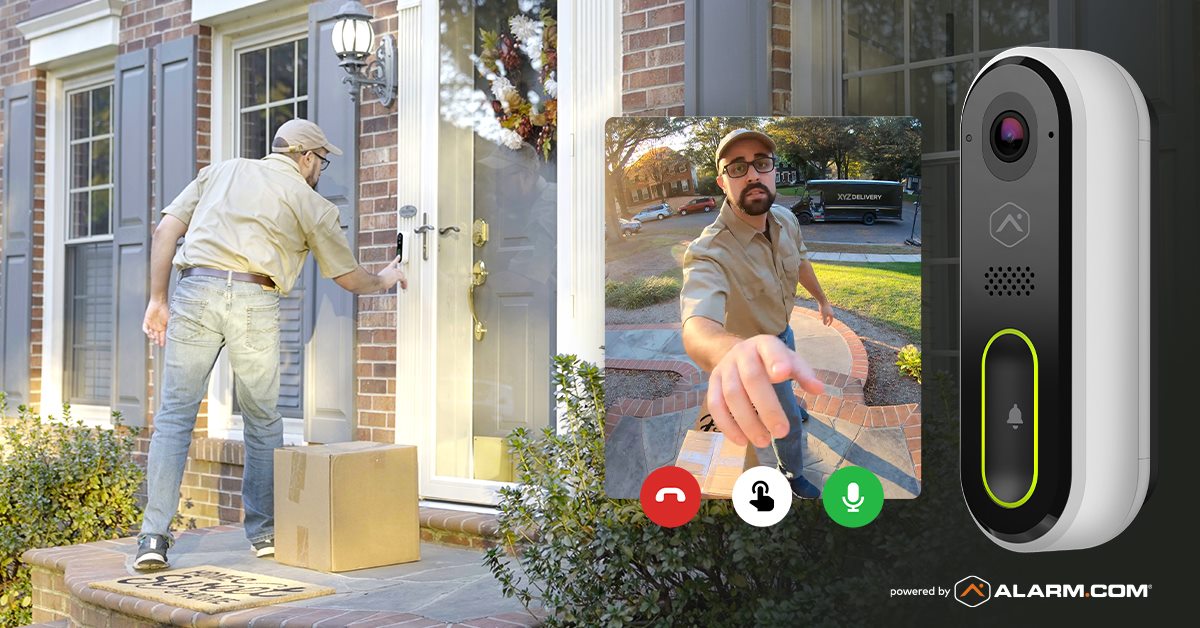
Most of what happens at a house happens at the front door.
Deliveries, visitors, and the people who walk up to see whether anyone is home — the front door is where the traffic is, and a doorbell camera is usually the first thing a homeowner actually uses every day rather than only after something goes wrong.
Two-way audio means you can answer the door from anywhere, which is as useful for redirecting a courier as it is for making it obvious the house is not empty.
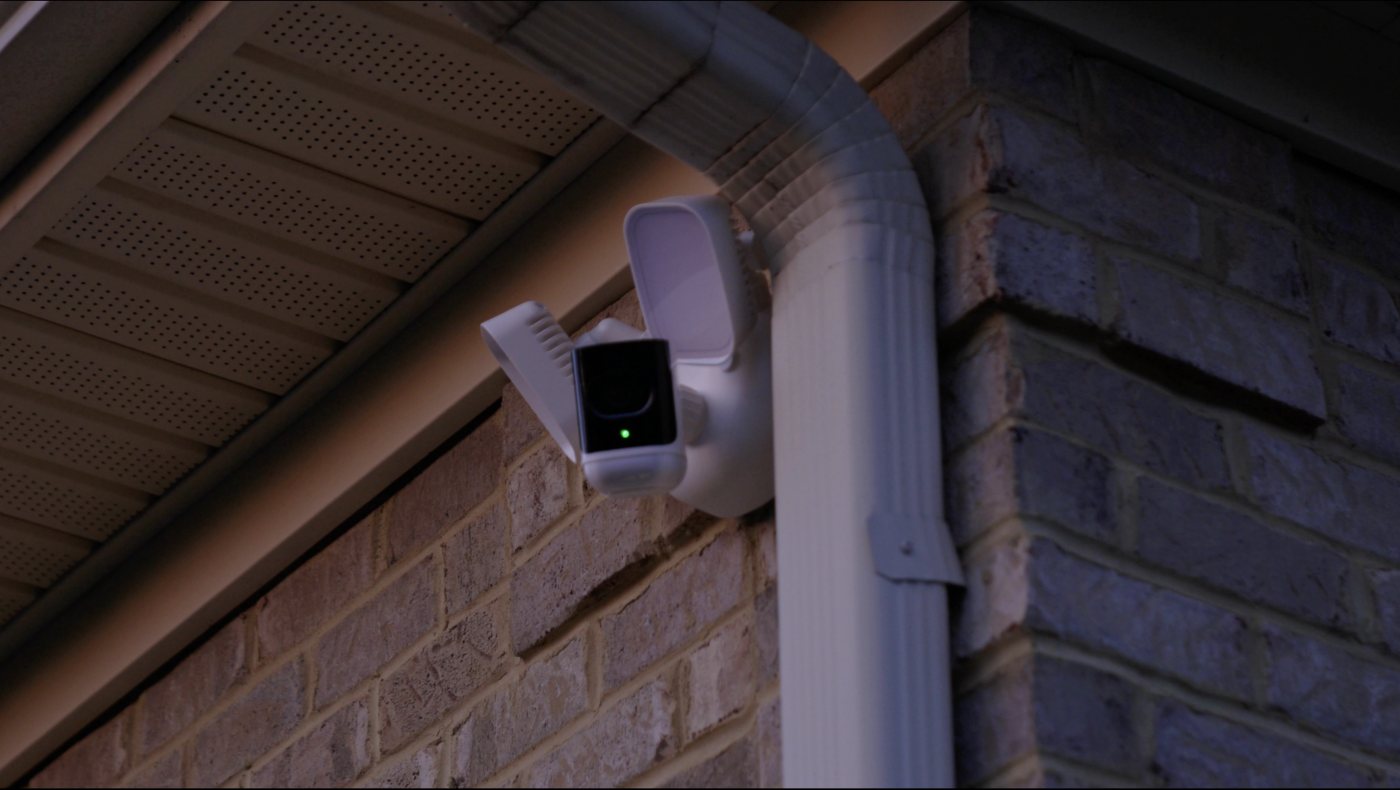
Mounted where it can see, not where the cable was easiest.
Under a soffit is usually the right place for an exterior camera: it is high enough to see a face rather than the top of a head, sheltered from weather and direct sun, and out of easy reach. It is also the hardest place to run cable to, which is exactly why cameras so often end up somewhere less useful.
The floodlight matters as much as the lens. A camera that has to fall back on infrared gives you a grey silhouette; one that triggers its own white light gives you colour, and colour is what makes a description usable to anybody else.
Questions homeowners ask about this.
How many cameras does a house need?
Usually three to five, placed deliberately. The front door, the driveway, and whichever secondary entrance is least visible from the street cover most of what homeowners actually end up reviewing.
We would rather install four cameras that produce usable footage than twelve that produce a lot of it.
Can I see the cameras on my phone?
Yes — live view, recorded playback, and event notifications, on the same app as your alarm if you have one.
Will they work at night?
The cameras we specify have infrared or low-light capability suited to the position. The harder problem is usually mixed lighting rather than darkness — a bright porch light against a dark yard is more difficult than no light at all.
That is solved through placement, which is why we position on site rather than from a floor plan.
Will a camera read a license plate?
Only if it is positioned for it. Plate capture needs a narrow field of view aimed along the direction of travel, and a camera doing that job is not also covering the front yard.
If plate capture matters to you, tell us and we will dedicate a camera to it rather than pretending a wide shot will do.
Where is the footage stored?
On a recorder at the house, with event clips also stored in the cloud so a stolen recorder does not take the evidence with it. Retention length is your choice and we size the recorder for it.
Get a home quote
We walk the house, look at how you actually live in it, and give you a straight price.
-
We call within one business day
To find a time that works around your operations, not ours.
-
A technician walks the property with you
Bring whatever documentation you have, or none at all. We document what is installed, what is missing, and what is coming due.
-
You receive a written plan and price
One plan for the whole property, phased across budget years if that is what the building needs.
-
Nothing else happens unless you say so
We do not chase. If the timing is wrong, tell us when to check back.