

Access control that lets you cut a credential in thirty seconds.
Cloud-based access control for offices, apartment buildings, and multi-site operations. Manage every door from one app, set rules by role and schedule, and stop re-keying the building every time someone leaves.
What an access control project includes
- Door hardware survey existing strikes, mag locks, closers, and frames assessed before anything is quoted.
- Controllers and readers cloud-managed, with local decision-making so doors keep working if the internet does not.
- Credential strategy cards, fobs, mobile credentials, or PIN — chosen for how your people actually move through the building.
- Rules by role and schedule contractors at specific hours, staff at others, and one-off access without a permanent credential.
- Egress and fire alarm interlock mag locks that release on alarm and comply with your egress requirements.
- Audit trail and reporting who opened what, when, exported when HR or an insurer asks.
- Integration with video and intrusion so a forced-door event bookmarks the camera clip.
Three things we do differently.
We survey the doors before we quote the system.
Half the surprises in access control projects are mechanical, not electronic — a door that does not latch reliably, a frame with no wire path, a closer that needs replacing. Finding those on the survey rather than on install day is what keeps the schedule.
We design for egress first.
Every locked door is a life safety question before it is a security question. Mag locks have to release on fire alarm and on loss of power, and the request-to-exit path has to work when it matters. We coordinate this with the fire alarm because we install that too.
We set it up so you can actually run it.
The measure of a good system is whether your property manager can cut a credential at 4:45 on a Friday without calling us. We train your staff and leave documentation, rather than making you dependent on a service call for routine changes.
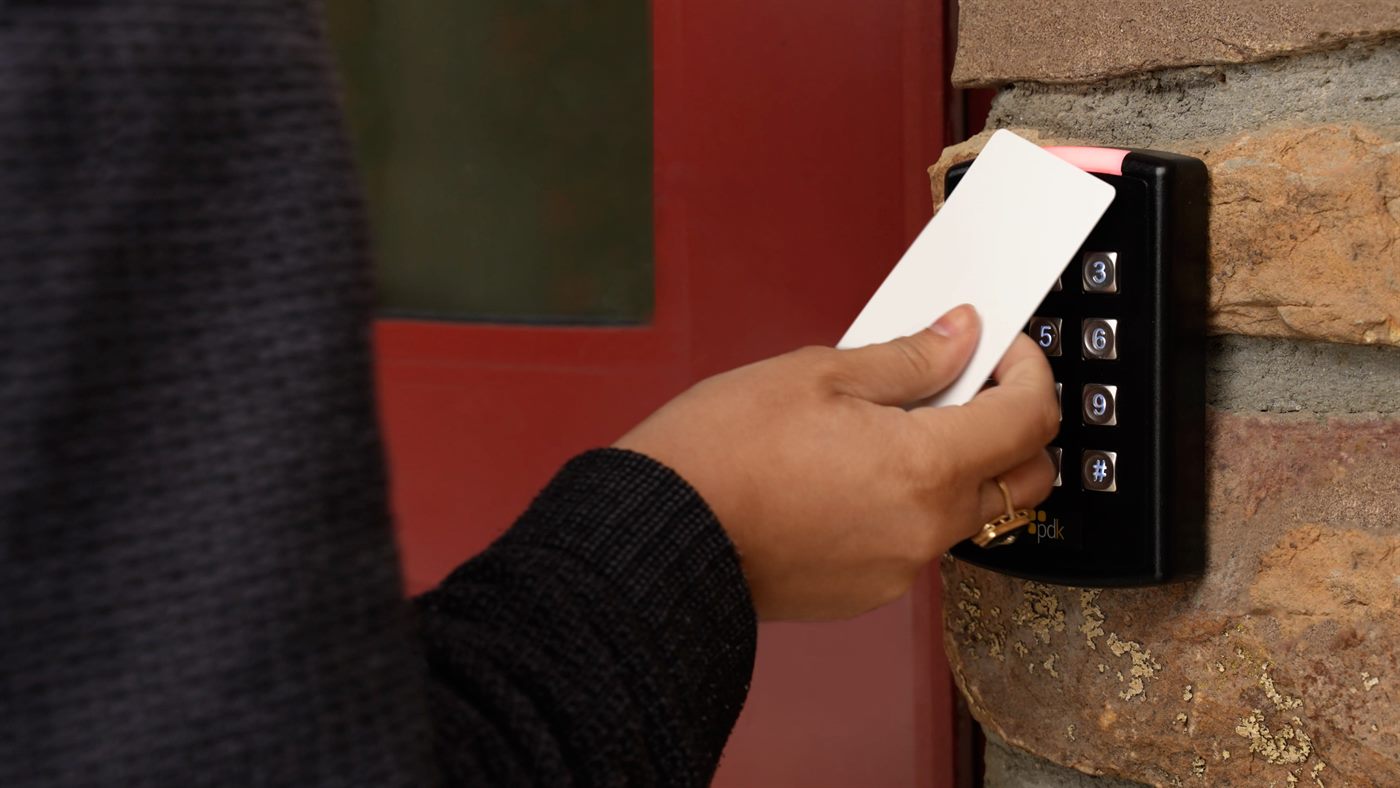
The reader is the part your people touch every day.
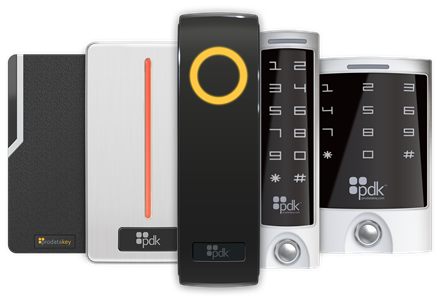
Reader choice is decided by the opening, not by a catalogue page. A mullion reader on a glass storefront, a single-gang reader in a finished corridor, a ruggedized unit on an exterior door that takes weather — and a keypad wherever a credential alone is not enough.
All of them report to the same cloud platform, so the credential list and the schedules stay in one place no matter how many different readers the building ends up with.
A phone is a credential nobody leaves in a desk drawer.
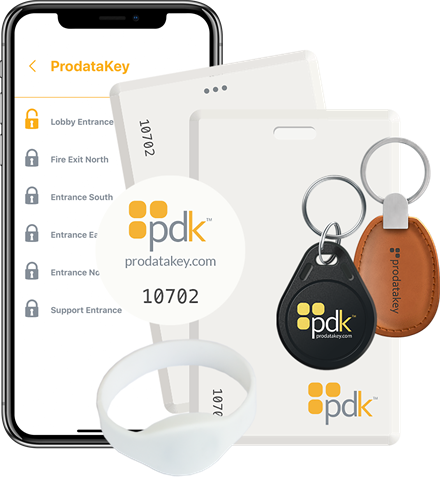
Mobile credentials remove the cost and the turnover cycle of physical cards. Issue one in seconds from the app, revoke it just as fast, and stop buying replacement fobs for people who lost theirs.
Cards, fobs, stickers, and wristbands all still work. Most buildings run a mix — staff on phones, contractors and visitors on printable cards.
What actually gets installed.
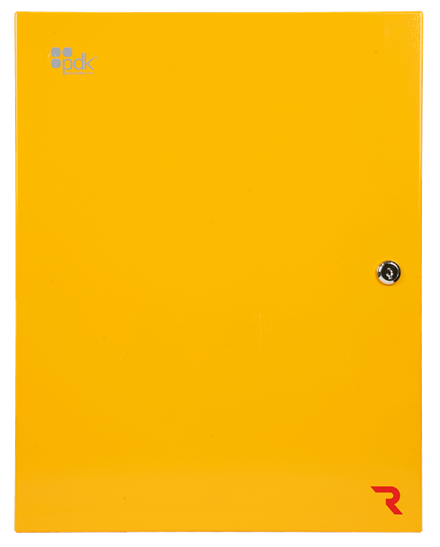
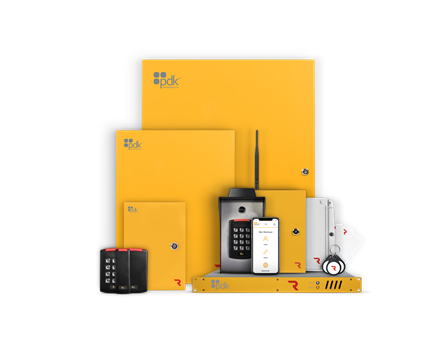
Controllers in the closet, readers at the doors, and whichever credential suits how your people move through the building.
Platforms we install
Cloud-based access control removes the on-premise server and the software licence renewals that used to come with it.
A locked door is a life safety question first.
Access-controlled doors on an egress path must release on fire alarm activation and on power loss. Because we install and inspect the fire alarm as well, that interlock is designed, tested, and documented together rather than argued about between two contractors during an inspection.
Where we install these systems.
Questions we get asked about this.
Can I manage more than one building from the same system?
Yes. Cloud-based access control is at its most useful across multiple sites — one login, one credential list, and one set of schedules covering every property you manage.
Adding a site later does not require replacing what is already installed.
What happens to the doors if the internet goes down?
Controllers hold their credential list and schedules locally and keep making access decisions during an outage. Doors continue to work normally.
What pauses is remote management and live event reporting, both of which resume automatically when connectivity returns. Events recorded during the outage upload afterward.
Can you use the card readers already installed?
Sometimes. Existing readers, wiring, and door hardware are assessed during the survey, and reusing sound infrastructure is usually the cheapest path.
Where a proprietary system cannot be integrated, we will say so and show you what reuse is actually possible rather than replacing everything by default.
How quickly can we remove someone's access?
Immediately, from a phone. That is the practical argument for access control over keys — a terminated employee's credential is dead before they reach the parking lot, and there is no re-keying and no lock replacement.
Do you integrate access control with our cameras?
Yes, and it is one of the more useful things we do. An access event — a forced door, a door held open, a credential rejected — tags the corresponding video so you find the clip by event rather than by scrubbing a timeline.
Request a site survey
We walk your building, document what you have, identify what is missing or coming due, and give you one written plan for the whole property. It takes about 45 minutes and costs nothing.
-
We call within one business day
To find a time that works around your operations, not ours.
-
A technician walks the property with you
Bring whatever documentation you have, or none at all. We document what is installed, what is missing, and what is coming due.
-
You receive a written plan and price
One plan for the whole property, phased across budget years if that is what the building needs.
-
Nothing else happens unless you say so
We do not chase. If the timing is wrong, tell us when to check back.