

The infrastructure everything else depends on.
Low-voltage wiring, network drops, and fiber optic cabling and splicing — installed to standard, labeled, documented, and tested. Most of the “system” problems we get called about turn out to be cabling problems.
What a cabling project includes
- Category cabling copper drops for data, wireless access points, cameras, and access control devices.
- Fiber optic cabling and splicing between buildings, floors, and IDF closets.
- Pathways and support conduit, cable tray, J-hooks, and firestopping at rated penetrations.
- Rack and closet buildout patch panels, cable management, and labeling that survives the next contractor.
- Testing and certification every run tested, with results provided as documentation.
- As-built documentation labeled drawings so the next person is not tracing cables by hand.
- New construction rough-in coordinated to the general contractor's schedule.
Three things we do differently.
We label everything, at both ends.
Unlabeled cable is the reason a fifteen-minute change becomes a half-day of tracing. Labeling and as-builts cost almost nothing during installation and save real money for the next twenty years, including when someone other than us does the work.
We test every run and give you the results.
A cable that terminates is not the same as a cable that performs. Certification testing catches the marginal runs that would otherwise show up months later as an intermittent camera or a device that drops off the network at random.
We firestop what we penetrate.
Running cable through a rated wall without restoring the rating is a code violation that gets found during an inspection, usually at the worst possible time. Since we do the fire alarm inspections in many of these same buildings, we are not inclined to create problems we will be looking at later.
What we install
Materials and methods to standard, because the infrastructure outlives every system that runs on it.
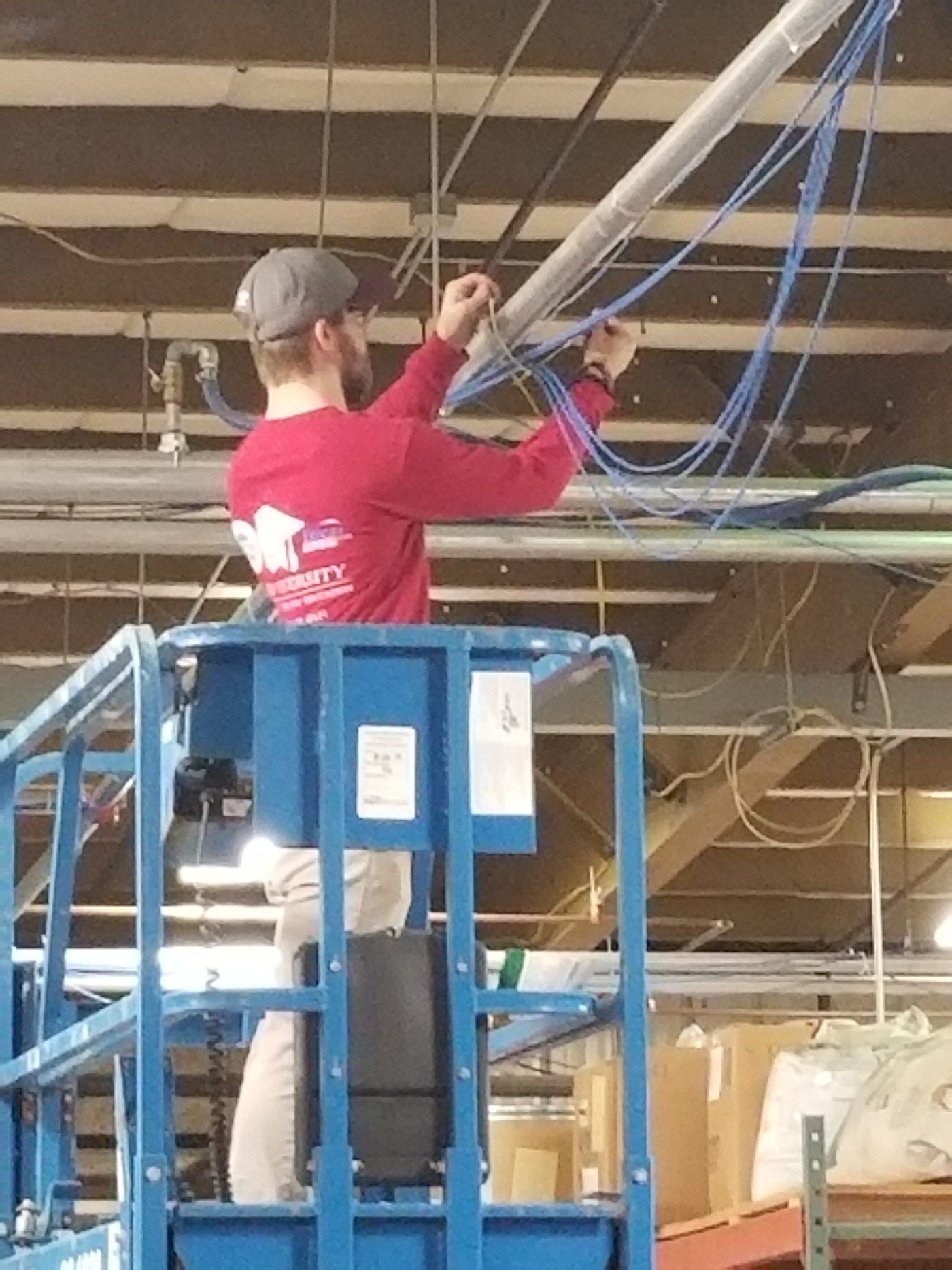
Cable that is supported properly is cable you can add to later.
Bundles run in tray or on J-hooks at a consistent height, kept clear of ductwork and lighting, with enough slack at each end to terminate twice if it comes to that. It costs very little to do at rough-in and it is close to impossible to correct afterwards.
The reason it matters is not tidiness. It is that the next drop, the next camera, and the next access-controlled door all get added to this pathway — and whether that is an hour of work or a day of it was decided here, before anyone closed the ceiling.
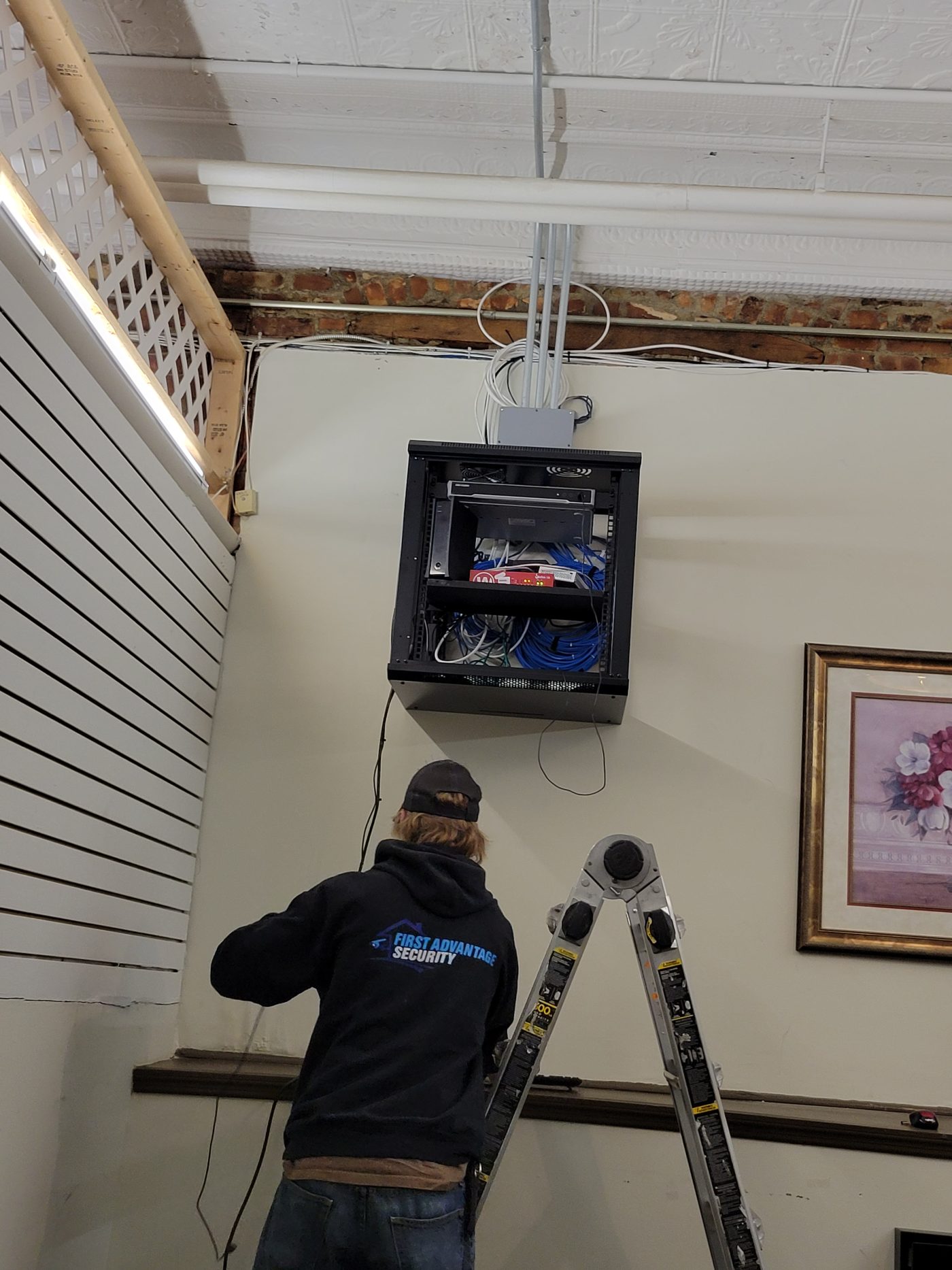
The switch and the recorder live in the same rack for a reason.
Every drop in the building ends here, and so does every camera. The switch that powers and carries them and the NVR that records them sit in one enclosure, which means the cameras, the cable they run on, and the recording they land in are one system with one person answerable for it.
That is the part worth insisting on. When the cabling belongs to one contractor and the cameras to another, a fault becomes an argument about whose it is before anyone starts fixing it. Here it is a single call and a single rack to open.
Older buildings make it harder and more worth doing properly. There is rarely a purpose-built communications room, so the rack goes where the building allows rather than where a drawing would put it — and the as-built documentation becomes the only reliable record of what went where.
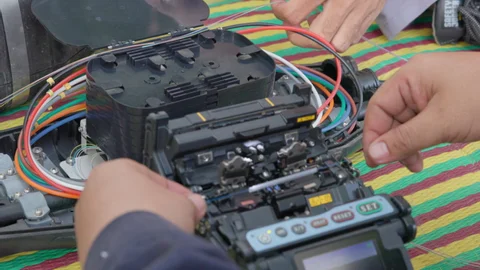
We splice and terminate our own fiber.
Fiber between buildings, up a riser, or out to a gate or a parking structure does not have to be subcontracted. We fusion splice on site, terminate, and test — so the run that connects a camera field or a second building is ours end to end, and the person who answers for it is the person who made it.
Every splice is machine-verified for loss at the time it is made, and the results go into the as-built documentation with the rest of the cable plant records.
Cable through a rated wall is an inspection item.
Every penetration through a fire-rated assembly must be firestopped to restore the rating. It is one of the more common findings when an AHJ walks a building, and it is entirely avoidable. We firestop as we go and document it.
Where we install these systems.
Questions we get asked about this.
Do you work with general contractors on new construction?
Regularly. We coordinate rough-in to the construction schedule so low voltage happens in the right sequence with framing, drywall, and ceiling grid — which is what keeps low voltage from becoming the trade that holds up the job.
Can you document cabling that is already installed?
Yes. Tracing, labeling, testing, and producing as-builts for existing infrastructure is common work, particularly in buildings that have accumulated runs from several contractors over the years.
In most cases the existing cable is fine and what is missing is the documentation.
Do you splice fiber?
Yes — fusion splicing and termination for single-mode and multi-mode fiber, between buildings, between floors, and into IDF closets.
Will you certify the cable you install?
Every run is tested and the results are provided to you as part of the closeout documentation. That record is what lets you rule cabling out when a device misbehaves two years from now.
Can you run cable for systems we bought elsewhere?
Yes. Cabling for equipment supplied by others is straightforward work. We will tell you honestly if the equipment specification and the cable plan do not match before we install anything.
Request a site survey
We walk your building, document what you have, identify what is missing or coming due, and give you one written plan for the whole property. It takes about 45 minutes and costs nothing.
-
We call within one business day
To find a time that works around your operations, not ours.
-
A technician walks the property with you
Bring whatever documentation you have, or none at all. We document what is installed, what is missing, and what is coming due.
-
You receive a written plan and price
One plan for the whole property, phased across budget years if that is what the building needs.
-
Nothing else happens unless you say so
We do not chase. If the timing is wrong, tell us when to check back.